Determine the Right Size Tankless Water Heater for Your Home’s Needs
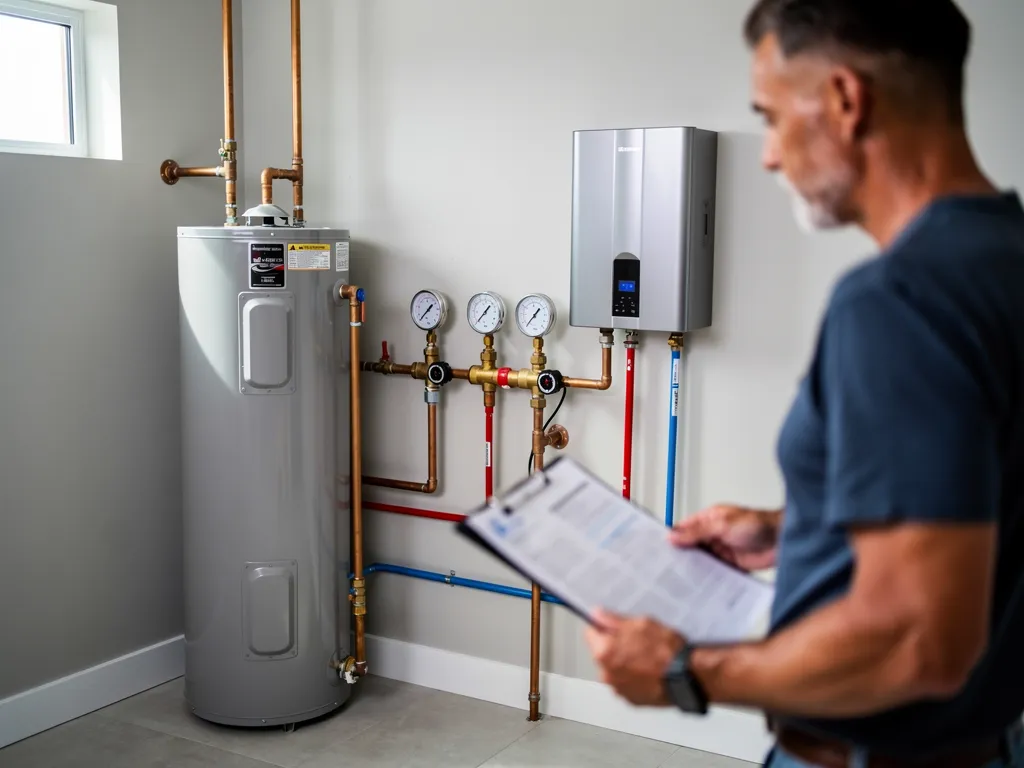
The right size tankless water heater for a home comes down to two numbers: peak simultaneous flow rate, measured in gallons per minute, and temperature rise, the gap between incoming water temperature and the hot water temperature a household actually wants. We size a tankless water heater in Central Virginia homes across Mineral, Louisa, Lake Anna, and the rest of the region around those two numbers rather than a rough estimate, since an undersized unit is one of the most common reasons tankless systems disappoint homeowners.
Why Size Your Tankless Water Heater by Flow Rate and Temperature Rise Instead of Gallons?
A tank water heater gets sized by storage volume, in gallons, but a tankless unit doesn’t store water, so that number doesn’t apply. Tankless sizing instead depends on how much hot water a home needs at once and how much heating that water actually requires to reach the desired temperature. If you’re still deciding between the two approaches, our tank vs. tankless comparison covers how the two sizing methods differ in more depth.
What Is Peak Simultaneous Flow Rate and Why Does It Matter for Tankless Heaters?
Peak simultaneous flow rate is the total gallons per minute a household could realistically demand if multiple hot water fixtures ran at the same time, a shower, a sink, and the washing machine, for example. A tankless unit has to be able to produce that much hot water in real time, so this number is the real ceiling on what size unit a home needs.
How Does Temperature Rise Affect Tankless Water Heater Performance?
Temperature rise is the difference between the temperature of the water coming into the home and the temperature a household wants out of the tap. A bigger temperature rise means the unit has to do more work per gallon, which reduces how much flow it can deliver at full capacity. A home with colder incoming groundwater needs a more powerful unit to hit the same output temperature than a home with warmer incoming water, even if both households use the same amount of hot water.
How Do You Calculate Your Home’s Peak Simultaneous Flow Rate (GPM)?

Calculating peak flow rate starts with listing every fixture that might realistically run hot water at the same time in a given household, then adding up their individual flow rates.
Which Fixtures Contribute Most to Your Peak Flow Rate?
Showers and tubs are usually the biggest contributors, since they run continuously for several minutes at a time, followed by the washing machine and dishwasher, which draw hot water in cycles rather than continuously. Bathroom and kitchen sink faucets add smaller amounts individually, but a household that regularly runs several fixtures at once should count all of them when estimating peak demand, not just the single largest draw.
Can You Use an Interactive Tool to Calculate Your Peak Simultaneous Flow Rate?
Several water heater manufacturers publish free online sizing calculators that estimate flow rate and recommend a unit size based on fixture count and household size. These can be a useful starting point, but an in-home assessment is still the most accurate way to size a unit correctly, since it accounts for a home’s specific fixtures, plumbing layout, and actual usage patterns rather than general assumptions.
How Do Local Groundwater Temperatures Influence Your Tankless Water Heater Size?
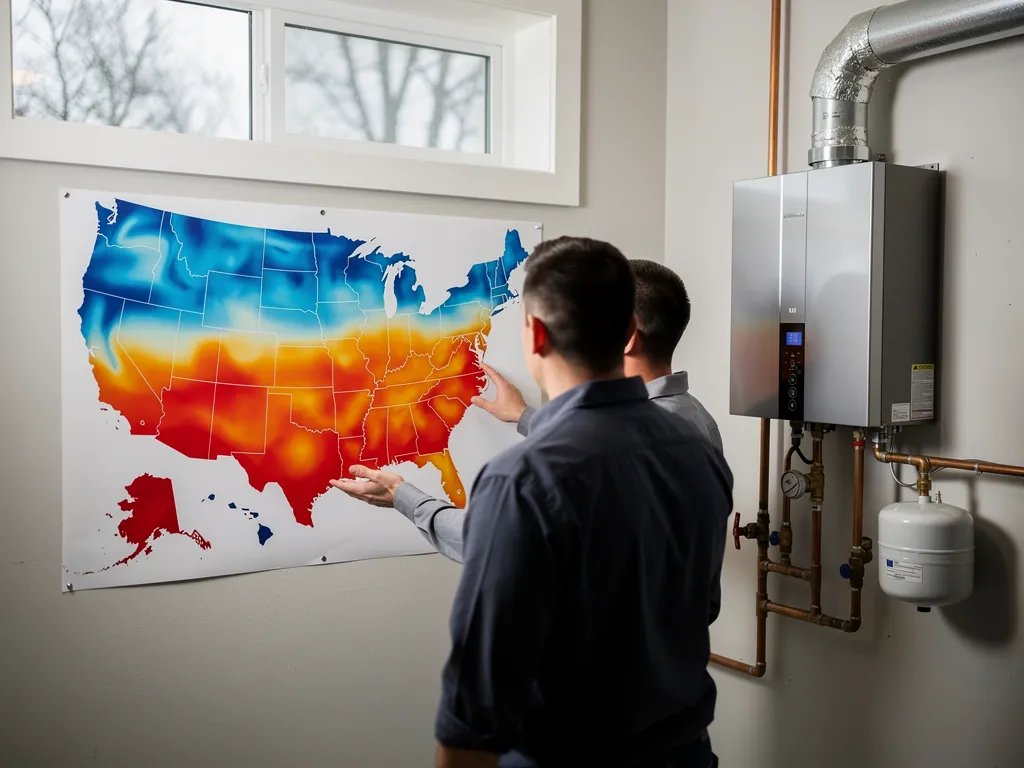
Groundwater temperature sets the starting point for the temperature rise calculation, and it varies meaningfully by region and season.
What Is the Formula to Calculate Temperature Rise Based on Regional Climate?
Temperature rise is calculated by subtracting the incoming groundwater temperature from the desired output temperature. In Central Virginia, groundwater generally runs somewhere in the 50s Fahrenheit for much of the year, though it can dip into the 40s during the coldest winter stretches, which means winter sizing calculations typically need a larger temperature rise than summer ones.
Where Can You Find Regional Winter Groundwater Temperature Data?
Most major tankless manufacturers publish a regional groundwater temperature map as part of their own sizing guides, which gives a reasonable seasonal estimate for a specific area. For the most accurate number for a specific property, an in-home assessment accounts for local conditions directly rather than relying on a regional average.
How Do You Apply the Tankless Water Heater Sizing Formula Using BTUs?
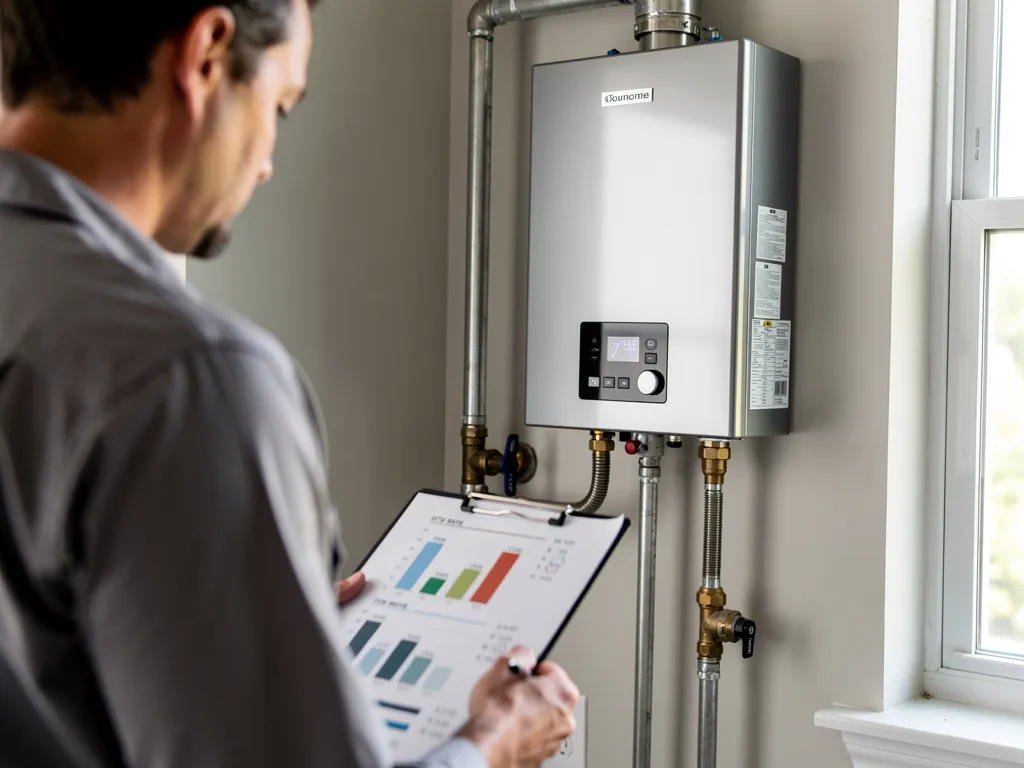
Once peak flow rate and temperature rise are known, those two numbers combine into a single BTU requirement that any specific unit either meets or doesn’t.
What Is the BTU Formula and How Does It Incorporate GPM and Temperature Rise?
The standard tankless water heater BTU formula is peak flow rate in gallons per minute, multiplied by 500, multiplied by the temperature rise in degrees Fahrenheit, which gives the BTUs per hour a unit needs to produce. That 500 figure accounts for the weight of water and the time conversion built into the formula, so it stays constant regardless of the specific home. A higher flow rate or a bigger temperature rise both push that BTU requirement up, which is why a home with cold winter groundwater and several simultaneous fixtures needs a significantly larger unit than a home with warmer water and lighter demand.
How Do Gas and Electric Tankless Units Differ in Their BTU or Kilowatt Requirements?
Comparing a gas vs electric tankless water heater starts with how each is rated: gas units are rated directly in BTUs per hour, matching the formula above. Electric units are rated in kilowatts instead, and since one kilowatt is roughly equivalent to 3,412 BTUs per hour, an electric unit’s kilowatt rating can be converted to BTUs to compare it against the same sizing math. Electric units are often more limited by a home’s available electrical capacity than gas units are, which is worth factoring in alongside the raw BTU number.
What Are Common Tankless Water Heater Sizes for Different Household Demands?
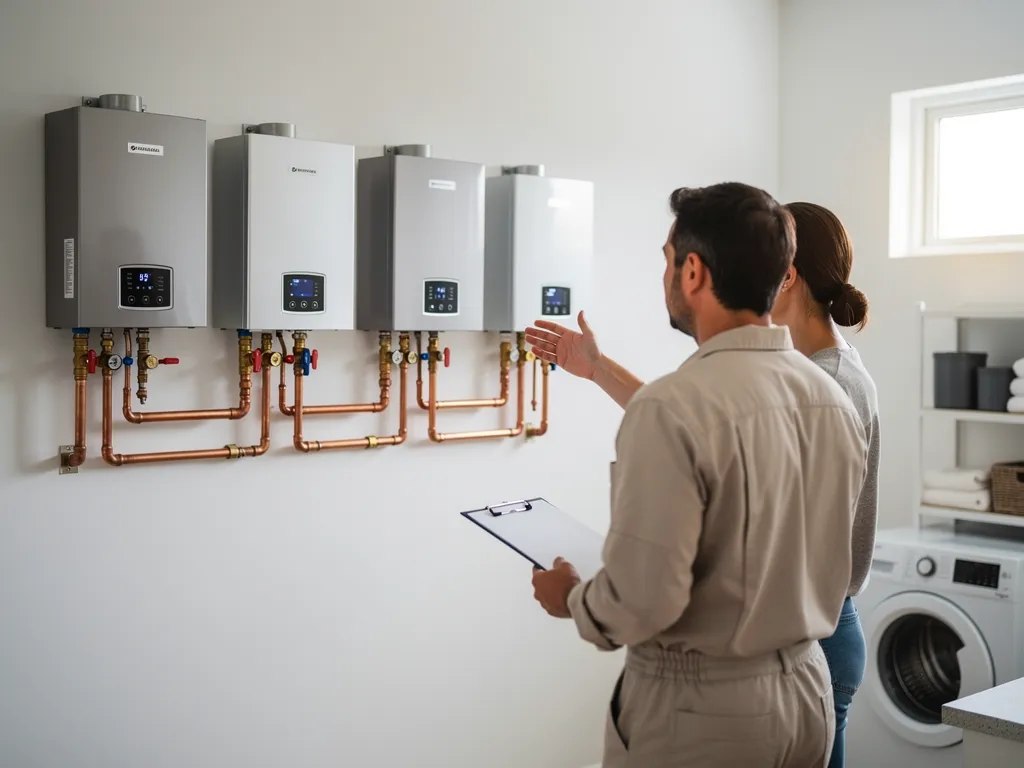
General sizing ranges give a useful starting point, though an in-home assessment is what actually confirms the right unit for a specific household.
What Size Heater Do Families of 1–2 People Typically Need?
A one- to two-person household typically has lower simultaneous demand, often covering a single shower plus a sink or two running at once, which generally falls on the smaller end of residential tankless sizing.
How Much Capacity Is Required for a Family of Four or Larger Homes?
A family of four or more, especially in a home with multiple bathrooms, tends to have a meaningfully higher peak flow rate, since mornings and evenings often involve two or more fixtures running hot water simultaneously. Larger households generally need a unit sized toward the higher end of the residential range, and some larger homes benefit from two units working together rather than a single large unit. A bigger unit generally means a bigger upfront cost too, which our installation cost guide breaks down in more detail.
How Can You Size Tankless Water Heaters for Luxury Fixtures and High-Demand Applications?
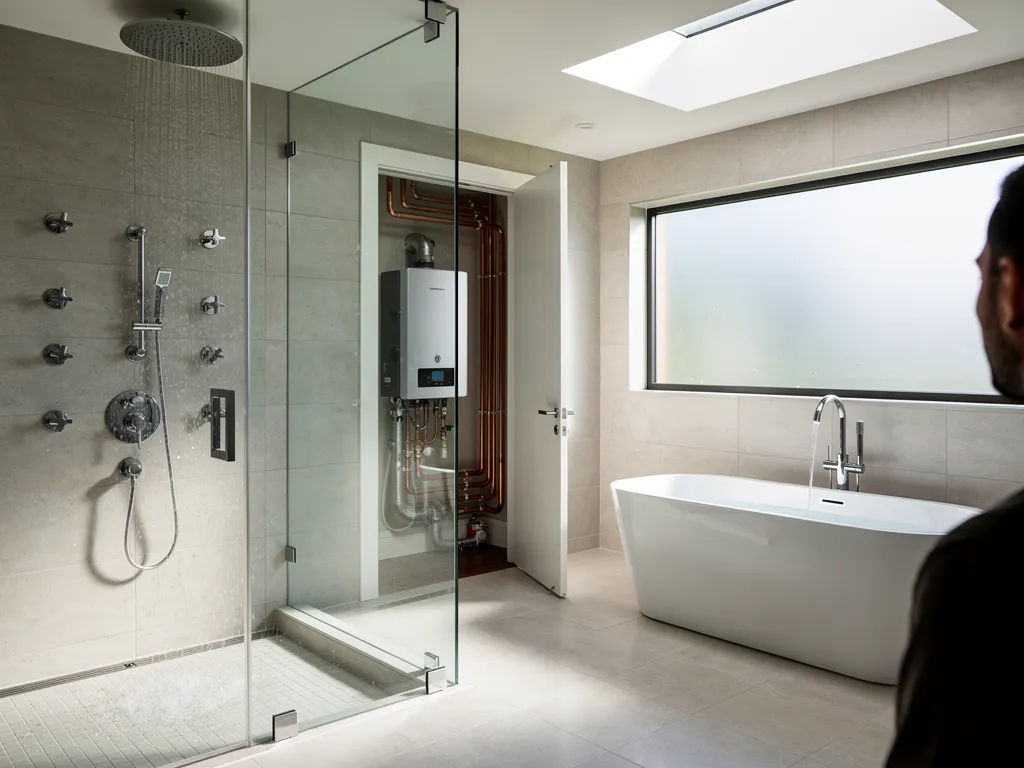
Luxury bathroom fixtures can push a home’s peak flow rate up significantly compared to a standard bathroom setup, and sizing needs to account for that directly.
How Do Rain Heads, Soaker Tubs, and Body Sprays Affect Flow Rate Calculations?
A standard showerhead is capped at around 2 to 2.5 gallons per minute under federal fixture standards, but a rain shower head, multiple body sprays, or a fast-fill soaker tub running in the same bathroom can push that single room’s flow rate well beyond a standard shower’s demand. A bathroom built around these fixtures needs its own flow-rate estimate rather than being treated the same as a standard shower in the overall calculation.
What Adjustments Are Needed for Multiple Fixtures Running Simultaneously?
Homes with luxury fixtures in more than one bathroom, or households that regularly run several high-flow fixtures at once, often need either a larger single unit or a multi-unit system to keep up. Calling (540) 500-1272 gets a technician looking at a home’s actual fixture list and usage pattern, rather than relying on a general estimate for a household with above-average demand.
Frequently Asked Questions
What size tankless water heater do I need for my home? It depends on your home’s peak simultaneous flow rate (how many fixtures run hot water at once) and the temperature rise needed based on your local groundwater temperature. A one- to two-person household typically needs less capacity than a family of four or more, but an in-home assessment is the most accurate way to size a unit correctly.
What happens if a tankless water heater is undersized? An undersized unit can’t keep up when multiple fixtures run hot water at the same time, resulting in reduced flow or a drop in water temperature. This is one of the most common complaints with tankless systems, and it almost always traces back to incorrect sizing rather than a defective unit.
Do rain shower heads and body sprays require a bigger tankless water heater? Often, yes. Rain heads, multiple body sprays, and soaker tubs can push a single shower’s flow rate well above a standard showerhead, so homes with these fixtures usually need their peak flow rate recalculated to include them.
Is gas or electric tankless easier to size for a home? Both use the same flow-rate and temperature-rise math, but electric units are often more limited by a home’s available electrical capacity, while gas units are more often limited by gas line sizing and venting. Either way, sizing comes down to matching the unit’s output to the home’s actual demand.
No nonsense, just predictable comfort, sized right the first time. If you’re planning a tankless installation for a home in Mineral, Louisa, or the Lake Anna area, call (540) 500-1272 and we’ll calculate the right size based on your actual fixtures and usage, not a generic estimate.