Tank vs. Tankless: Which Water Heater Is Right for Your Home?
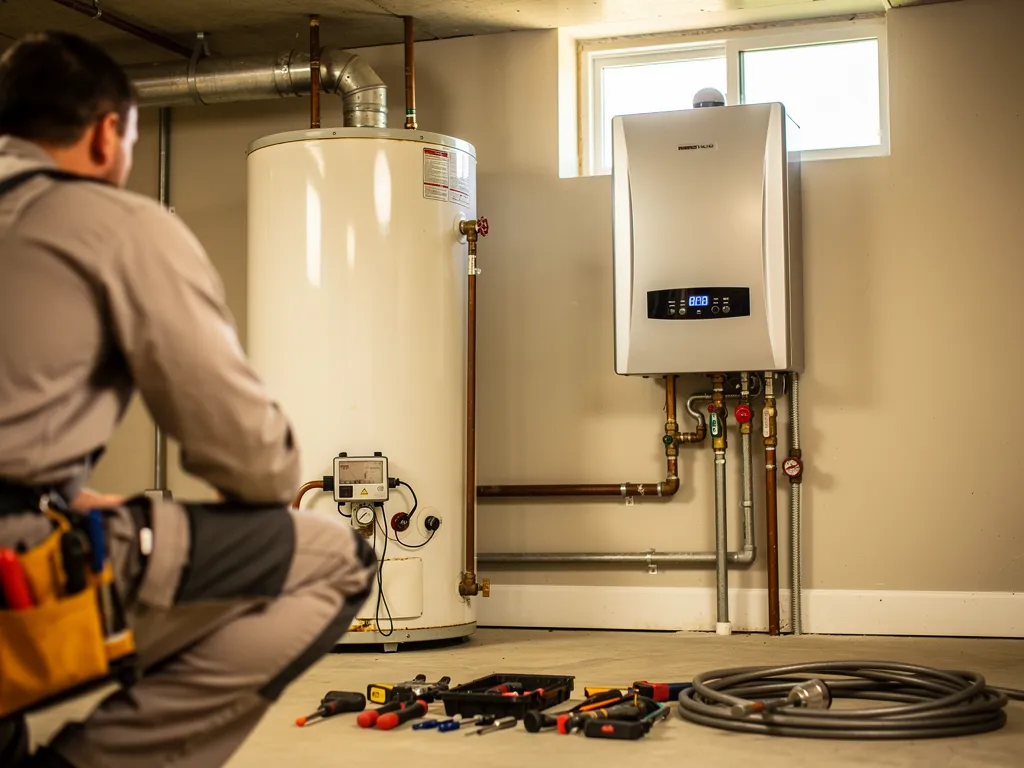
A traditional tank water heater stores and continuously reheats a set amount of hot water, while a tankless unit heats water on demand as it flows through the system — the right choice depends on household size, budget, and how much space is available. Wet Spot Plumbing installs and repairs both types for homeowners across Mineral, Lake Anna, Montpelier, Short Pump, and the rest of Central Virginia, so here’s how to think through the decision.
Key Takeaways
A tank water heater stores hot water and reheats it continuously, while a tankless unit heats water only when a faucet or appliance calls for it.
Tank water heaters typically last 8 to 12 years; tankless units can last 15 to 20 years or more with regular maintenance.
Tank units generally cost less upfront (roughly $1,500 installed on average), while tankless installations run higher (roughly $1,000 to $3,000 installed), largely due to more involved installation requirements.
Tankless water heaters can be up to about 30% more energy efficient than a traditional tank, according to general industry estimates.
Tankless units take up significantly less space and provide continuous hot water, while tank units are simpler to install and repair.
Wet Spot Plumbing offers financing through Synchrony, which can make a larger tankless installation easier to fit into a budget.
A tank water heater stores hot water and reheats it continuously, while a tankless unit heats water only when a faucet or appliance calls for it.
Tank water heaters typically last 8 to 12 years; tankless units can last 15 to 20 years or more with regular maintenance.
Tank units generally cost less upfront (roughly $1,500 installed on average), while tankless installations run higher (roughly $1,000 to $3,000 installed), largely due to more involved installation requirements.
Tankless water heaters can be up to about 30% more energy efficient than a traditional tank, according to general industry estimates.
Tankless units take up significantly less space and provide continuous hot water, while tank units are simpler to install and repair.
Wet Spot Plumbing offers financing through Synchrony, which can make a larger tankless installation easier to fit into a budget.
How Do Tank and Tankless Water Heaters Actually Work?
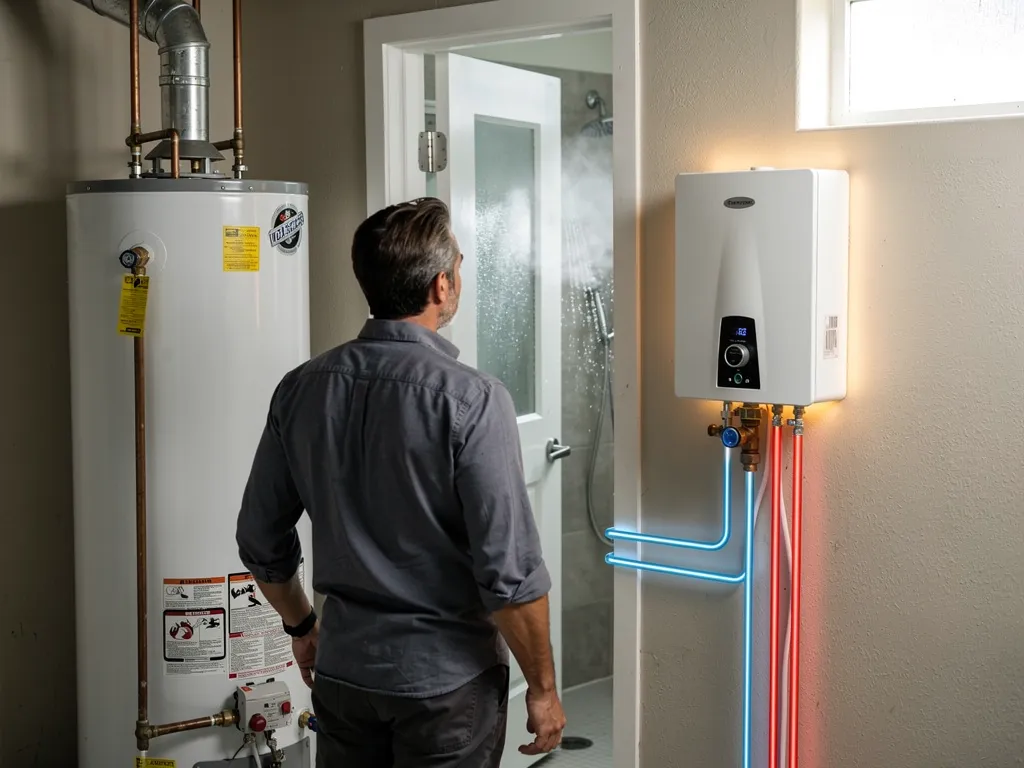
The core difference comes down to timing: a tank heater keeps a supply of hot water ready at all times, while a tankless unit produces hot water only the moment it’s needed.
How Does a Traditional Tank Water Heater Work?
A tank water heater stores anywhere from 30 to 80 gallons of water and keeps it heated continuously, so hot water is available immediately when a faucet is turned on. The tradeoff is that the tank keeps reheating that stored water around the clock, even when no one’s using it, and once the tank runs empty during heavy use, there’s a wait for it to refill and reheat.
How Does a Tankless Water Heater Work?
A tankless water heater has no storage tank at all — instead, it heats water directly as it passes through the unit on its way to a faucet or appliance. That means a virtually endless supply of hot water, since there’s no tank to run out, but it also means the unit has to work harder in the moment rather than relying on a pre-heated reserve.
How Long Do Tank and Tankless Water Heaters Last?
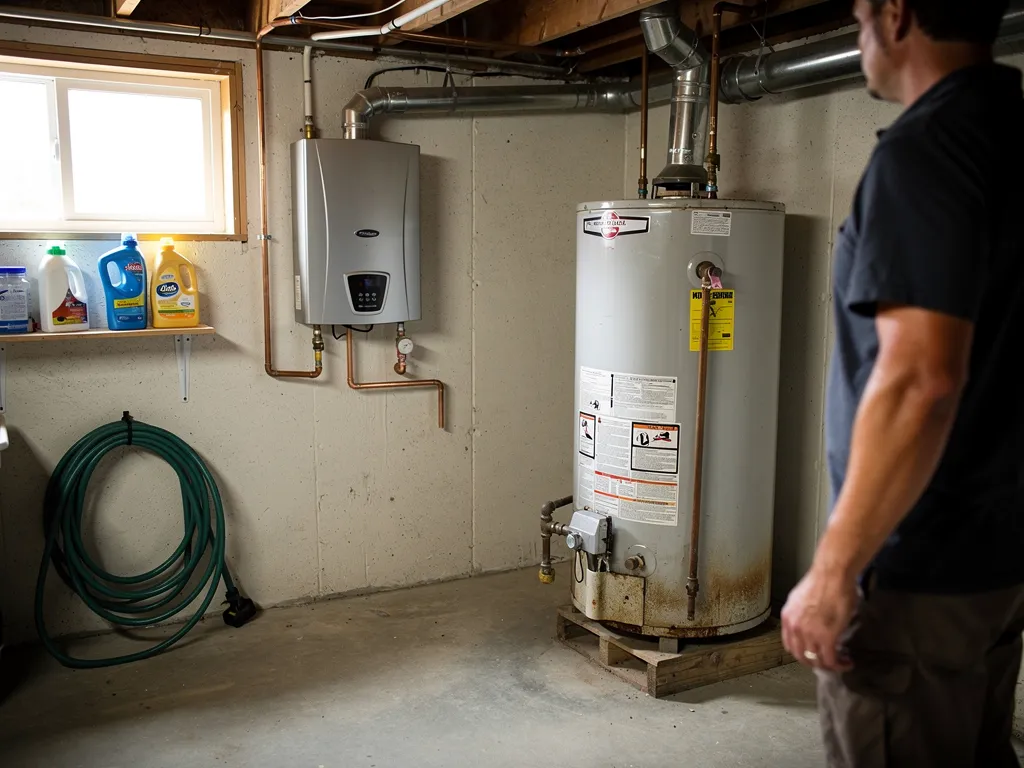
Lifespan is one of the clearest differences between the two, and it’s a big part of the long-term cost picture beyond the upfront price tag.
What Is the Average Lifespan of a Tank Water Heater?
A standard tank water heater typically lasts 8 to 12 years before corrosion or sediment buildup inside the tank leads to leaks or reduced performance. Once a tank starts showing multiple warning signs at once — rumbling noises, a leak at the base, inconsistent temperatures — replacement is usually more cost-effective than continuing to repair it.
How Much Longer Can a Tankless Water Heater Last?
Tankless water heaters can last 15 to 20 years or more with regular maintenance, since there’s no tank to corrode from the inside. That longer lifespan is a meaningful part of why the higher upfront cost evens out for a lot of households over time.
What Are the Practical Tradeoffs Between Tank and Tankless?
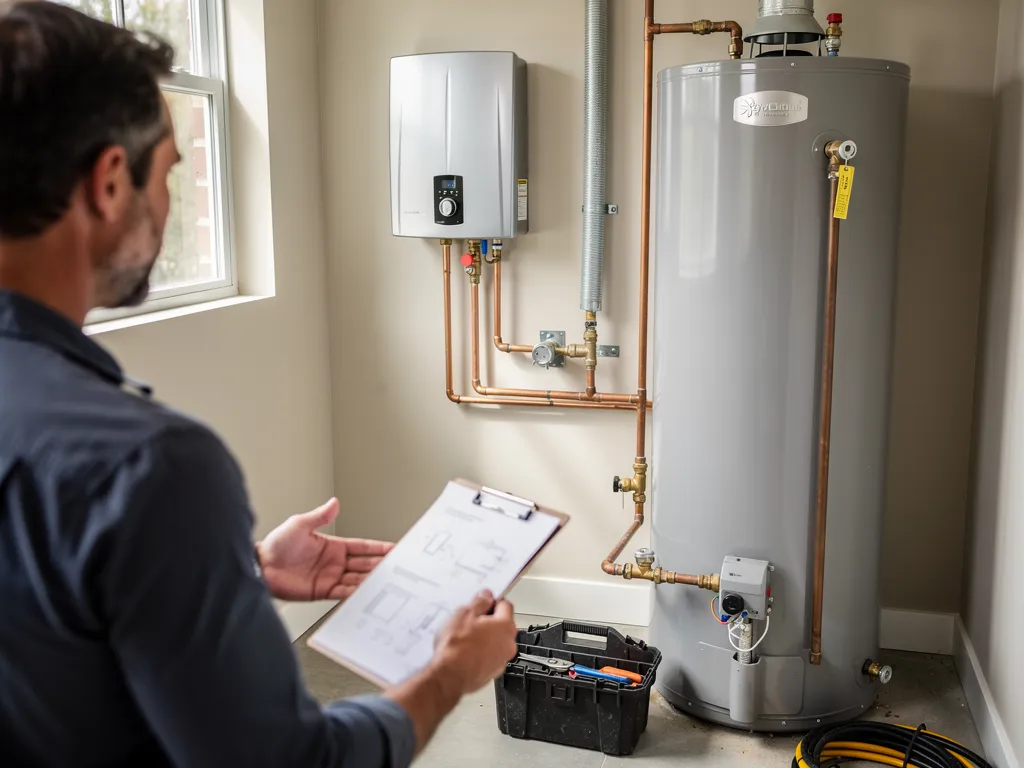
Beyond lifespan, the decision usually comes down to space, installation complexity, and how the upfront cost compares to long-term savings.
Which Water Heater Takes Up Less Space and Requires Different Installation?
Tankless units are compact and typically mount on a wall, freeing up the closet or utility space a tank would otherwise take up — a real advantage for smaller homes or tight utility areas. A tankless water heater installation is usually more involved than swapping in a new tank, though, since it may require upgraded gas or electrical lines depending on the unit and the home’s existing setup.
How Do Upfront Cost and Long-Term Efficiency Compare?
Tank water heater cost generally runs around $1,500 installed on average, with a typical range of roughly $500 to $3,000 depending on the unit and labor. A tankless installation typically runs $1,000 to $3,000 installed, on the higher end largely because of installation complexity rather than the unit itself. Tankless units can be up to about 30% more energy efficient than a tank, according to general industry estimates, which can offset some of that higher upfront cost over the unit’s longer lifespan — though actual savings depend on household hot water usage.
How Do You Know When to Repair vs. Replace a Water Heater?
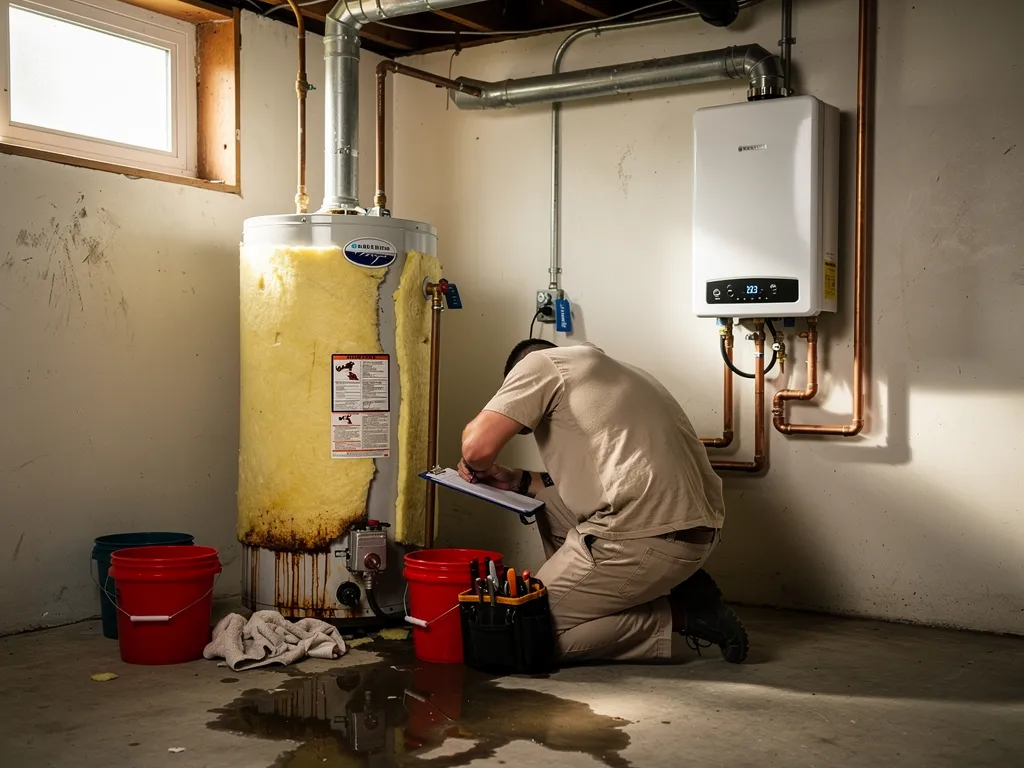
Age and the number of issues showing up at once are usually the deciding factors between a repair and a full replacement.
What Are the Signs It’s Time to Replace Rather Than Repair?
A water heater nearing or past its typical lifespan that’s showing more than one issue at once — rumbling, a leak, inconsistent temperatures — is usually a better candidate for replacement than another repair. A single, isolated issue on a newer unit, on the other hand, is often a straightforward and worthwhile repair.
Does Wet Spot Plumbing Offer Financing for a New Water Heater Installation?
Yes — Wet Spot Plumbing offers financing through Synchrony, which can make a larger installation, like switching from a tank to a tankless system, easier to plan around rather than paying the full cost upfront. Call (540) 500-1272 to ask about financing options for a specific installation.
Frequently Asked Questions
Is a tankless water heater worth the higher upfront cost? It depends on household hot water usage and how long you plan to stay in the home — the higher upfront cost is offset over time by a longer lifespan and lower energy use, but a tank unit may make more sense for a smaller household or a shorter-term budget.
Can Wet Spot Plumbing install a tankless water heater in a home that currently has a tank? Yes. Wet Spot Plumbing installs both tank and tankless water heaters, including converting a home from a tank system to tankless where the setup allows for it.
How do I know if my water heater needs a repair or a full replacement? A newer unit with a single issue is usually worth repairing, while an older unit showing multiple problems at once — noise, leaks, and inconsistent temperature together — is typically more cost-effective to replace. Wet Spot Plumbing can assess the unit’s condition and walk through the tradeoffs before recommending either option.
Does Wet Spot Plumbing serve Short Pump and Montpelier for water heater installation? Yes — Wet Spot Plumbing installs and repairs both tank and tankless water heaters for homeowners throughout Short Pump, Montpelier, Mineral, Lake Anna, and the rest of Central Virginia.
Trying to decide between a tank and a tankless water heater for your home? Wet Spot Plumbing installs and repairs both for homeowners across Montpelier, Short Pump, Mineral, Lake Anna, and the rest of Central Virginia — call (540) 500-1272 to talk through which option fits your household best.