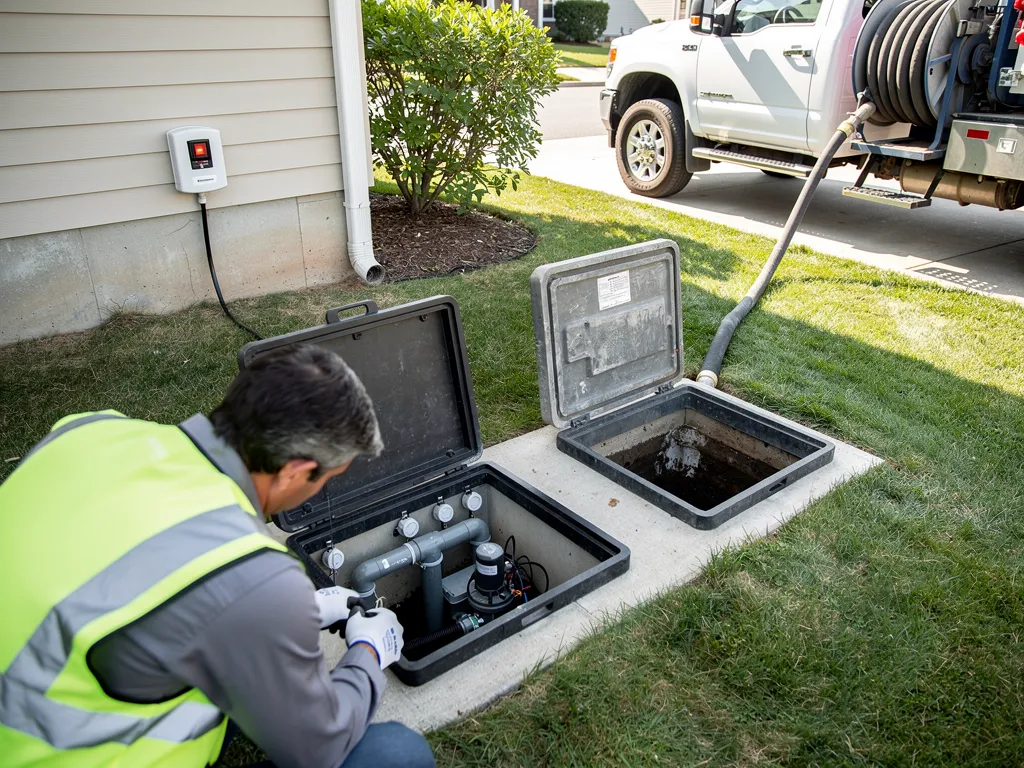
What Every Well-and-Septic Homeowner Should Know About Septic Pumps
A septic pump generally needs professional inspection about once a year, more often than a conventional gravity-fed septic system, because it has electrical and mechanical parts that can fail without warning. Wet Spot Plumbing provides septic pump repair for homeowners across Mineral, Lake Anna, Louisa, and the rest of Central Virginia, where a well and septic system is common rather than the exception, so knowing what to watch for can save a homeowner from a much messier problem.
Key Takeaways
A septic pump and septic tank pumping are two different things – a pump moves wastewater mechanically, while tank pumping is the periodic removal of solids by a service truck.
Systems with pumps or float switches should generally be inspected about once a year, compared to roughly every three years for a conventional gravity system, per EPA guidance.
A septic alarm going off is not something to ignore or reset and forget. It’s the system’s way of signaling a real problem.
Most septic pumps last around 7 to 10 years, though well-maintained units can run longer.
Gurgling drains, slow flushing, or a sewage smell near the yard can all point to a struggling pump.
Not every septic system has a pump at all. Whether one applies depends on the property’s layout and drainfield design.
A septic pump and septic tank pumping are two different things – a pump moves wastewater mechanically, while tank pumping is the periodic removal of solids by a service truck.
Systems with pumps or float switches should generally be inspected about once a year, compared to roughly every three years for a conventional gravity system, per EPA guidance.
A septic alarm going off is not something to ignore or reset and forget. It’s the system’s way of signaling a real problem.
Most septic pumps last around 7 to 10 years, though well-maintained units can run longer.
Gurgling drains, slow flushing, or a sewage smell near the yard can all point to a struggling pump.
Not every septic system has a pump at all. Whether one applies depends on the property’s layout and drainfield design.
What Does a Septic Pump Do, and Does Every Septic System Have One?
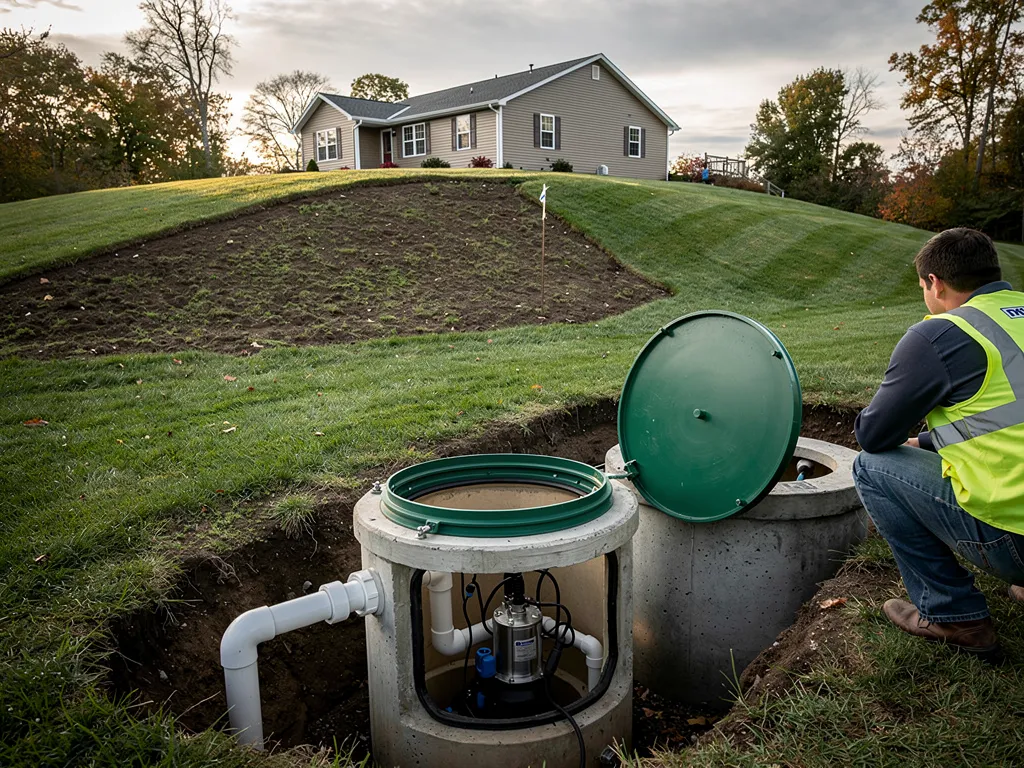
A septic pump is a submersible pump installed in a separate pump chamber that pushes wastewater from the septic tank out to the drainfield, typically used when the drainfield sits higher than the tank or the layout doesn’t allow gravity to do the work on its own. Not every property has one. A straightforward, gravity-fed system on flat, well-suited ground may never need a pump at all, while homes with mound systems, elevated drainfields, or certain lot layouts common across the hills and terrain around Lake Anna and Louisa often do.
Septic Pump vs Septic Tank Pumping: What’s the Difference?
These two terms get mixed up often, but they describe different parts of the system. Septic tank pumping refers to a service truck removing the accumulated solids (sludge and scum) from the tank itself, typically every three to five years for an average household. A septic pump, by contrast, is a mechanical component, a small motor with moving parts, that can wear out, clog, or fail electrically, independent of how full the tank is. A homeowner can be current on tank pumping and still have a pump that’s failing.
How Often Does a Septic Pump Need to Be Serviced or Inspected?
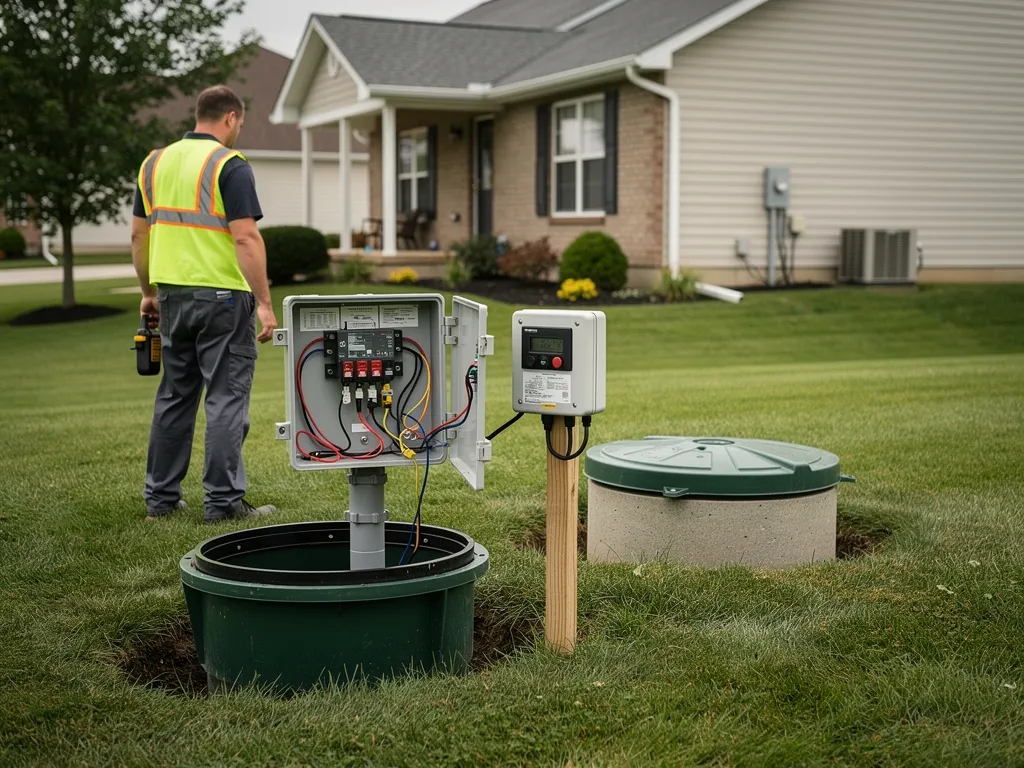
Systems with electrical components like pumps and float switches generally need inspection about once a year, more frequently than the roughly three-year interval recommended for conventional gravity systems. That difference exists because moving parts and electrical connections are more likely to fail than a passive gravity system with no mechanical components at all.
Why Do Pump Systems Need More Frequent Attention Than Gravity Systems?
A gravity system has almost nothing that can mechanically break since wastewater flows downhill from the tank to the drainfield. A pump system introduces a motor, wiring, a float switch, and an alarm circuit, all of which are exposed to a wet, corrosive environment and see regular use every time water drains from the house. A yearly check lets a technician catch early wear, a sticking float switch, or a weakening motor before it turns into a backup inside the home. Homeowners in Fluvanna, Spotsylvania, and other parts of Wet Spot Plumbing’s Central Virginia service area with pump-dependent systems are generally better served sticking to the more frequent schedule rather than the tank-only three-year interval. Wet Spot Plumbing’s technicians can set up that annual check at (540) 500-1272.
What Are the Warning Signs of a Failing Septic Pump?
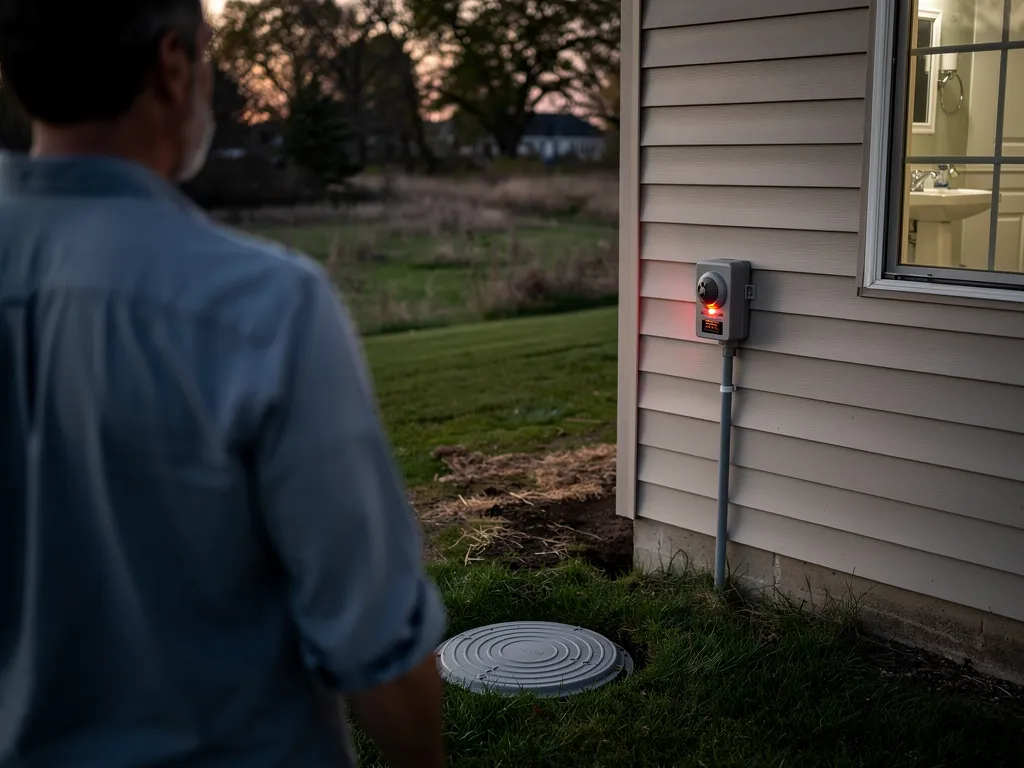
The most reliable early sign is the septic alarm itself, which is specifically designed to sound before a full backup happens. Beyond the alarm, homeowners might notice gurgling drains, slower-than-normal flushing, or a sewage odor near the pump chamber or drainfield, any of which is worth a call before the problem escalates.
The alarm sounds or a warning light activates. This is the system telling you the water level in the pump chamber is higher than it should be.
Gurgling sounds from drains or toilets, especially after multiple fixtures are used in a short period.
A sewage smell near the yard, pump chamber, or drainfield that wasn’t there before.
The pump runs constantly or cycles unusually often, which can point to a stuck float switch or a motor working harder than it should.
Slow drains throughout the house, particularly if plunging or clearing a single fixture doesn’t fix it.
The alarm sounds or a warning light activates. This is the system telling you the water level in the pump chamber is higher than it should be.
Gurgling sounds from drains or toilets, especially after multiple fixtures are used in a short period.
A sewage smell near the yard, pump chamber, or drainfield that wasn’t there before.
The pump runs constantly or cycles unusually often, which can point to a stuck float switch or a motor working harder than it should.
Slow drains throughout the house, particularly if plunging or clearing a single fixture doesn’t fix it.
What Does the Septic Alarm Mean?
A septic alarm is wired to a float switch inside the pump chamber and is built to trip when wastewater rises above its normal operating level. In other words, it’s an early warning, not a false alarm to silence and forget. Ignoring it or resetting it without an inspection risks the water level continuing to rise until it backs up into the home, which is a far more expensive and disruptive problem than the pump repair that likely triggered it in the first place.
What Happens If a Failing Pump Goes Unaddressed?
Left alone, a failing pump typically leads to wastewater backing up into the home through drains and toilets, standing water pooling near the pump chamber or drainfield, or, eventually, a full system failure that requires emergency service rather than a scheduled repair. Catching a pump issue at the alarm stage is almost always a smaller, cheaper fix than waiting for a full backup.
How Long Does a Septic Pump Typically Last?
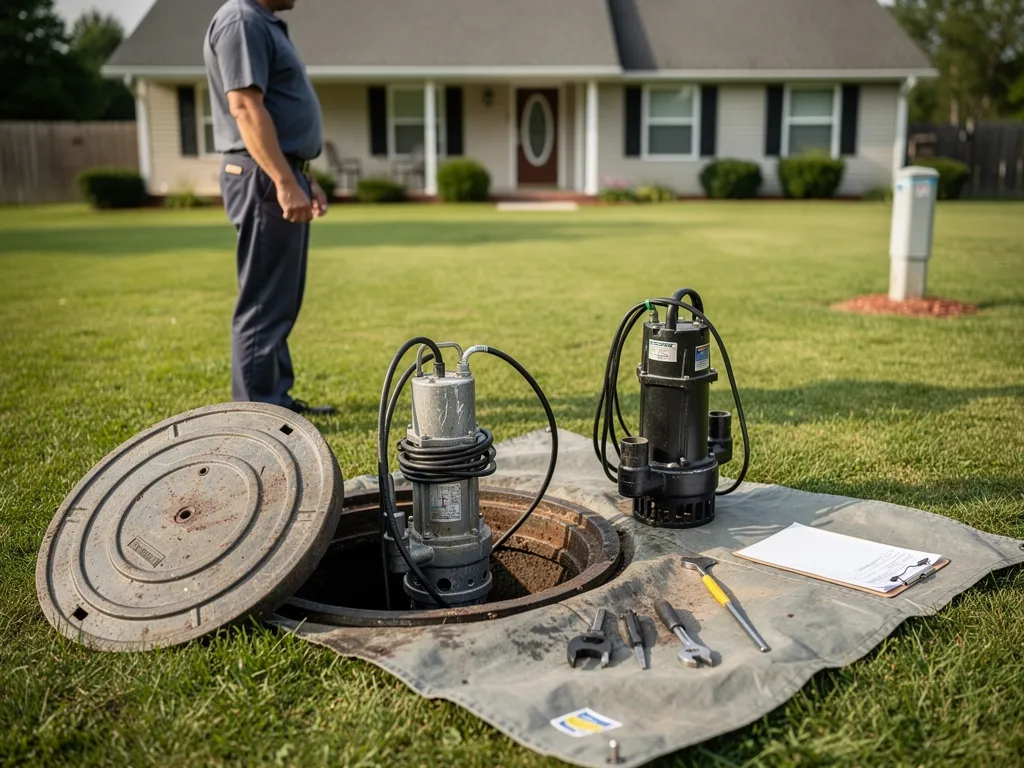
Most septic pumps last around 7 to 10 years under normal conditions, according to general industry sourcing, though well-maintained units running under light use can last considerably longer. Grinder-style pumps, which macerate solids before pumping, tend to run on the shorter end of that range because they do more mechanical work with each cycle.
A few factors influence how long a specific pump lasts:
Usage frequency – a larger household generating more wastewater puts more cycles on the pump over time.
Installation quality – a properly sized, correctly installed pump generally outlasts one that was undersized or poorly set for the job.
What goes down the drain – flushing wipes, grease, or other non-biodegradable material forces the pump to work harder and fail sooner.
Regular inspection – catching a small issue, like a worn seal or a sticking float, before it becomes a full failure extends the pump’s working life.
Usage frequency – a larger household generating more wastewater puts more cycles on the pump over time.
Installation quality – a properly sized, correctly installed pump generally outlasts one that was undersized or poorly set for the job.
What goes down the drain – flushing wipes, grease, or other non-biodegradable material forces the pump to work harder and fail sooner.
Regular inspection – catching a small issue, like a worn seal or a sticking float, before it becomes a full failure extends the pump’s working life.
Frequently Asked Questions
Can I inspect my own septic pump, or does it need a professional?
The pump chamber involves electrical wiring and wastewater, so it’s not a DIY inspection. A professional can safely check the float switch, alarm circuit, and pump condition, and knows what a normal reading looks like versus an early warning sign.
Is a septic pump the same thing as a sump pump?
No. A sump pump moves groundwater away from a home’s foundation, while a septic pump moves wastewater from the septic tank to the drainfield. They’re both submersible pumps, but they handle completely different jobs and aren’t interchangeable.
Do all homes with septic systems have a septic pump?
Not necessarily. Whether a property has one depends on the layout of the drainfield relative to the septic tank. Flat, well-suited lots often use gravity alone, while elevated or mound-style drainfields typically require a pump to move wastewater uphill.
What should I do if my septic alarm goes off?
Reduce water use in the house right away and call a professional rather than resetting the alarm and ignoring it. The alarm is designed to give a warning before a backup happens, so getting it checked quickly is usually the difference between a simple repair and a much bigger mess.
Not sure whether your system even has a pump, or wondering why your alarm keeps going off? Wet Spot Plumbing serves well-and-septic homeowners across Mineral, Lake Anna, Louisa, and the surrounding Central Virginia counties, and can take a look before a small warning turns into a backed-up house. Call (540) 500-1272 to get a straightforward answer.