Tankless Water Heater Maintenance Tips for Virginia Homeowners
Routine tankless water heater maintenance comes down to two things: flushing mineral scale out of the heat exchanger on a regular schedule, and keeping the filters and air intake clear. We maintain tankless water heaters for homes across Mineral, Louisa, Lake Anna, and the rest of Central Virginia, and homes on well water need to stay ahead of this maintenance more than most, since well water often carries more dissolved minerals than municipal supply.
How Often Should You Flush and Descale Your Tankless Water Heater?
Most manufacturers recommend flushing a tankless unit at least once a year, though homes with harder water, including many well water homes, often benefit from flushing twice a year instead. The right schedule for a specific home comes down to what’s actually in the water, not a fixed number that applies everywhere.
Why Is Annual Flushing Important for Preventing Limescale Buildup?
Every time a tankless unit heats water, dissolved minerals in that water have a chance to settle out and cling to the inside of the heat exchanger. Left alone, that mineral scale builds up layer by layer, gradually insulating the exchanger and making the unit work harder to produce the same amount of hot water. Flushing clears that buildup before it has a chance to affect performance.
How Does Water Hardness Impact Your Maintenance Schedule?
Water hardness, meaning how much dissolved calcium and magnesium a water supply carries, is the single biggest factor in how often a tankless unit actually needs flushing. Many well water sources in Central Virginia run harder than municipal water, which is why well water homes often need to flush more often than the manufacturer’s general annual recommendation. A water test is the most reliable way to know exactly how hard a specific home’s water is, and that number is what should drive the schedule.
What Are the Step-by-Step Instructions for DIY Tankless Water Heater Descaling and Flushing?
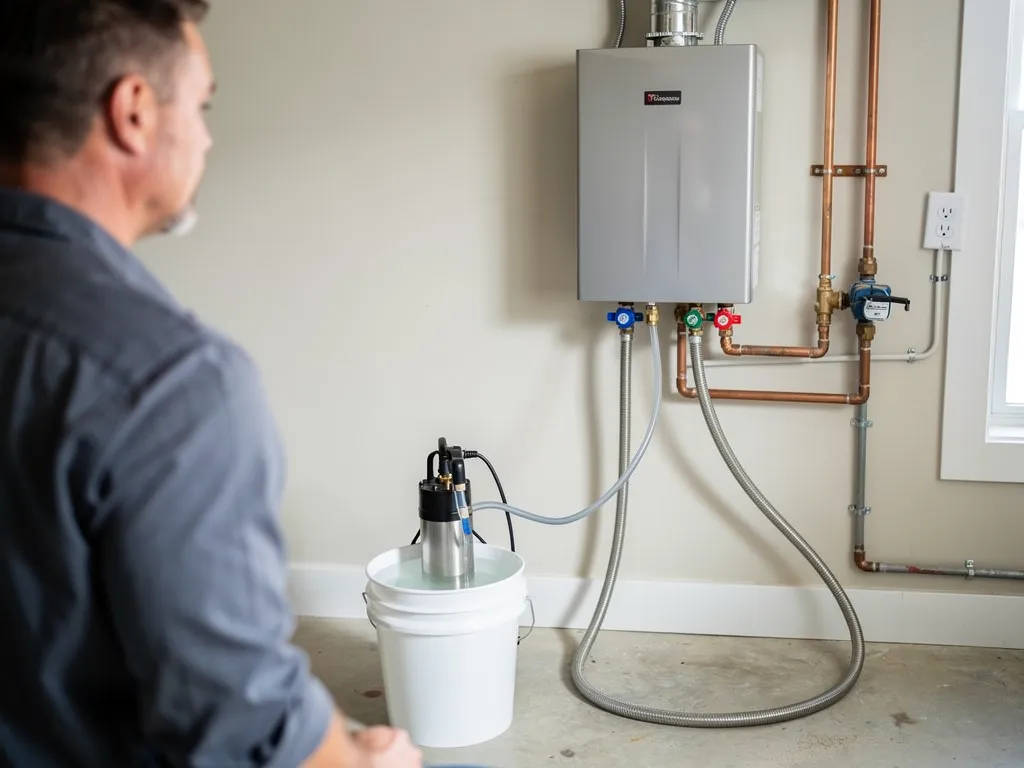
Descaling a tankless water heater at home is realistic for a lot of homeowners, as long as the unit already has isolation valves installed and the basic steps are followed in order.
Which Tools and Solutions Are Needed for Safe Descaling?
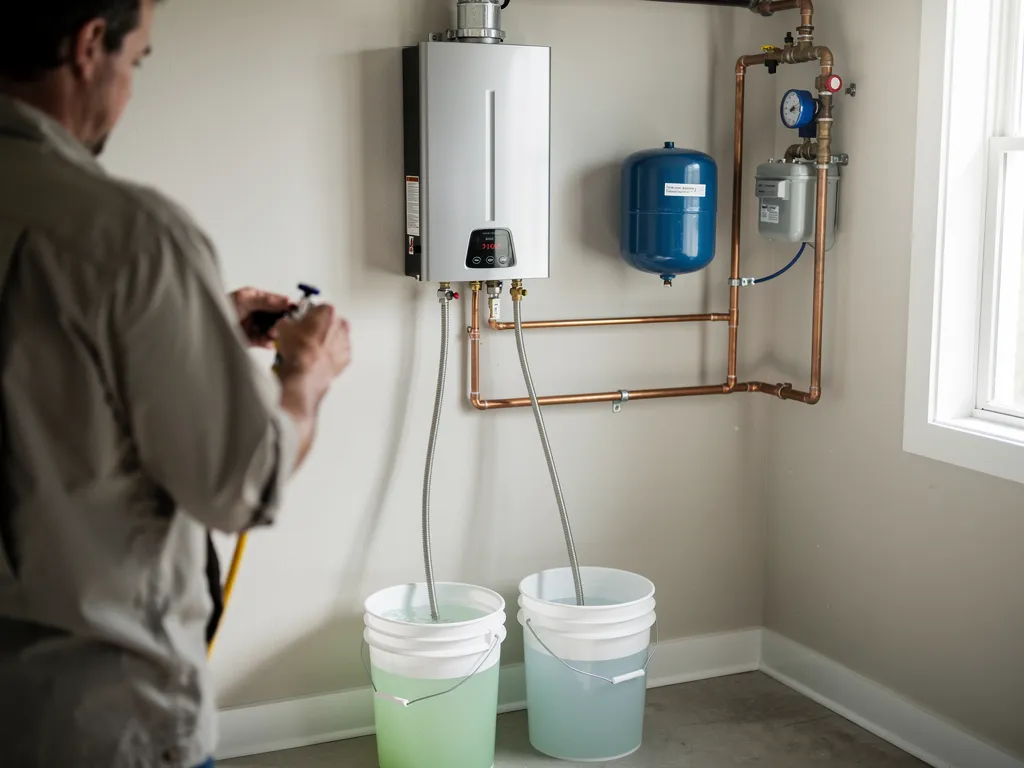
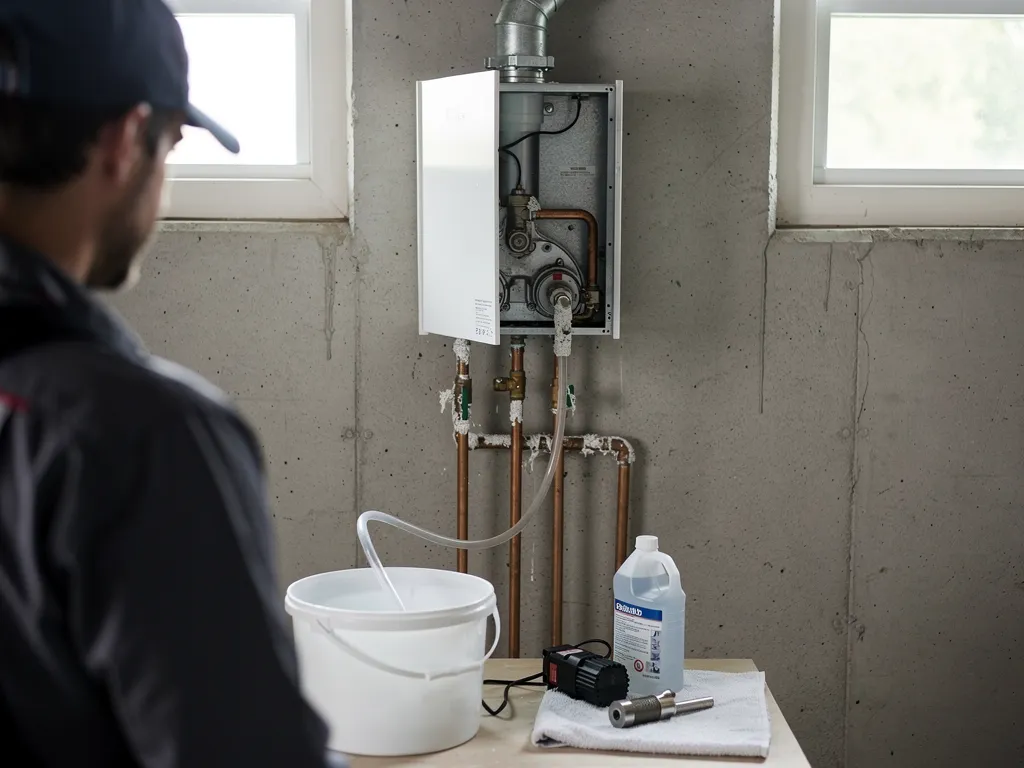
A proper flush needs a small circulation pump, two hoses with fittings that match the unit’s service ports, a food-safe descaling solution (often a mild vinegar solution or a commercial descaling product made for tankless units), and a bucket to catch the solution once it’s flushed out. Gloves and eye protection are a good idea too, since descaling solution can irritate skin and eyes on contact.
How to Properly Connect the Circulation Pump and Service Ports?
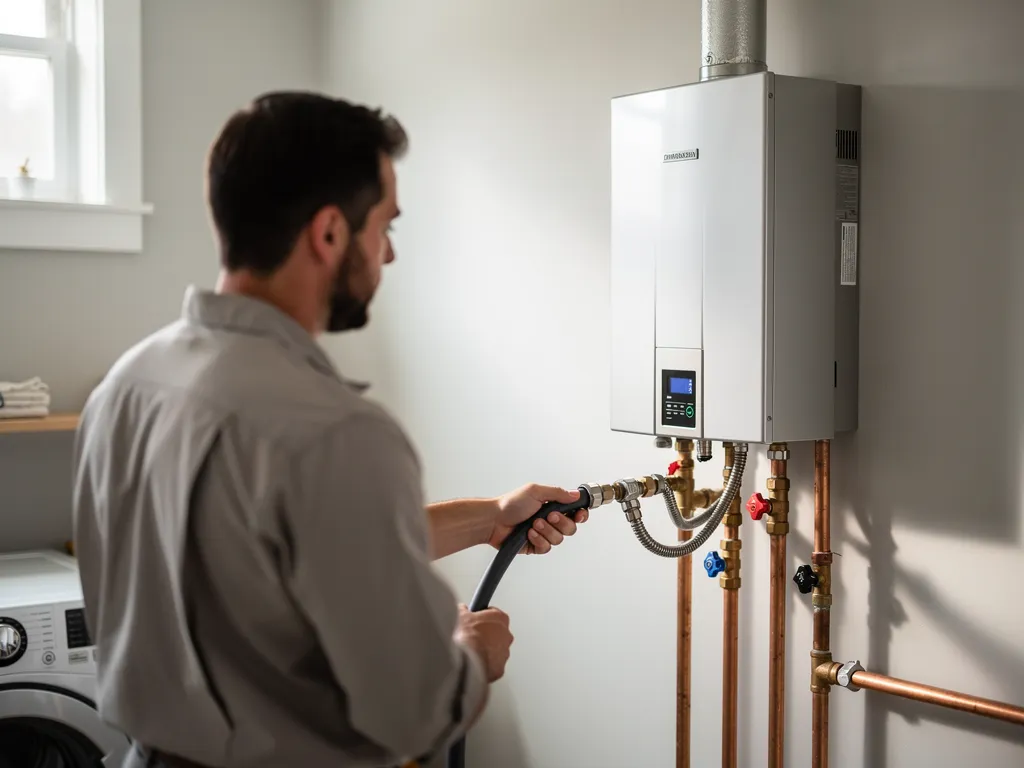
Start by shutting off the unit’s power and gas or electrical supply, then close the hot and cold isolation valves. Connect one hose from the pump to the cold water service port and the other hose to the hot water service port, creating a closed loop that runs through the pump. Pour the descaling solution into a bucket, drop both hose ends into it, and run the pump so the solution circulates through the heat exchanger for somewhere around 45 minutes to an hour. Once that’s done, disconnect the loop, flush the system with clean water through the same ports for several minutes, then reopen the isolation valves and restore power before testing the unit.
How Can You Maintain Inlet Water Filters and Air Intake for Optimal Performance?
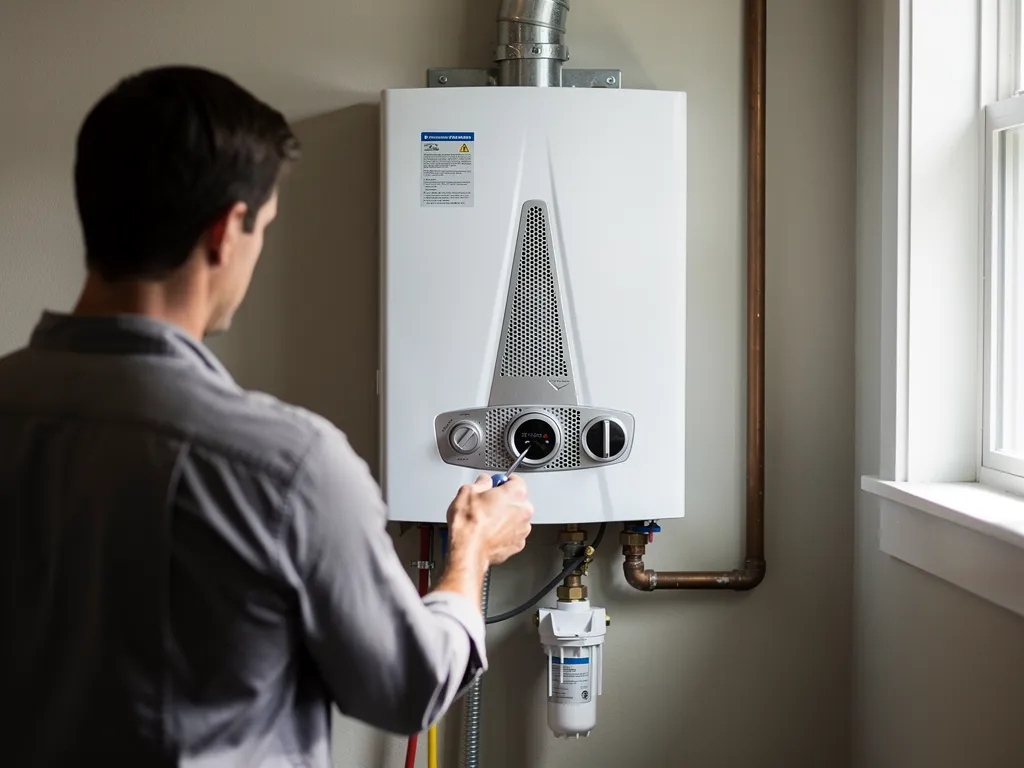
Beyond the heat exchanger itself, two other spots need regular attention: the inlet water filter and the air intake and condensate system.
What Is the Recommended Cleaning Protocol for Inlet Water Filters?
The inlet filter catches sediment before it reaches the unit’s internal components, and it’s worth checking any time hot water flow seems reduced. Shutting off the cold water supply, removing the filter screen, and rinsing it clean under running water is usually all it takes, and doing this every few months keeps sediment from restricting flow in the first place.
How to Clear Condensate Traps and Air Intake Filters Effectively?
Condensing tankless units produce a small amount of condensate that drains through a trap, and that trap can clog with sediment or algae over time if it’s never checked. Clearing it typically means disconnecting the drain line, flushing it with water, and reconnecting it. The air intake, wherever the unit draws combustion air from, should also stay free of dust, debris, or anything that could restrict airflow, since a restricted intake can trigger a shutdown.
What Are Common Tankless Water Heater Error Codes and How Can You Prevent Premature Failures?
Most premature tankless failures trace back to the same root cause: scale that was never cleared out until it caused a real problem.
Which Signs Indicate Scale Buildup on the Heat Exchanger?
A gradual drop in hot water output, a unit that takes longer to reach temperature than it used to, or unusual noises during operation are the most common early signs. An error code related to overheating or flow can also point to scale, since a partially blocked exchanger changes how water moves through the unit.
When Should You Contact a Certified Technician for Repairs?
If flushing doesn’t resolve a performance issue, or if an error code keeps returning after a flush and a reset, that’s the point where a technician’s diagnosis makes more sense than continuing to guess. Calling (540) 500-1272 connects you with a technician who can check the unit against its actual service history rather than troubleshooting blind.
How Does Proper Maintenance Extend the Lifespan and Save Energy Costs?
A well-maintained tankless unit generally runs more efficiently and has a longer tankless water heater lifespan than one that’s never had its heat exchanger flushed.
What Is the Impact of Limescale on Heat Exchanger Efficiency?
Limescale acts like insulation inside the heat exchanger, so the burner or heating element has to work harder to transfer the same amount of heat to the water passing through. Over time, that extra strain shows up as reduced efficiency and, eventually, premature component wear.
How Much Energy Can You Save With Regular Maintenance?
The exact savings depend on local water hardness and how long scale has been allowed to build up, so there isn’t one universal number that applies to every home. What’s consistent across tankless units generally is that a clean heat exchanger uses noticeably less energy to heat the same amount of water than one coated in scale, which is the whole case for staying on a regular flushing schedule.
Where Can You Find Reliable Professional Maintenance Services and DIY Toolkits?
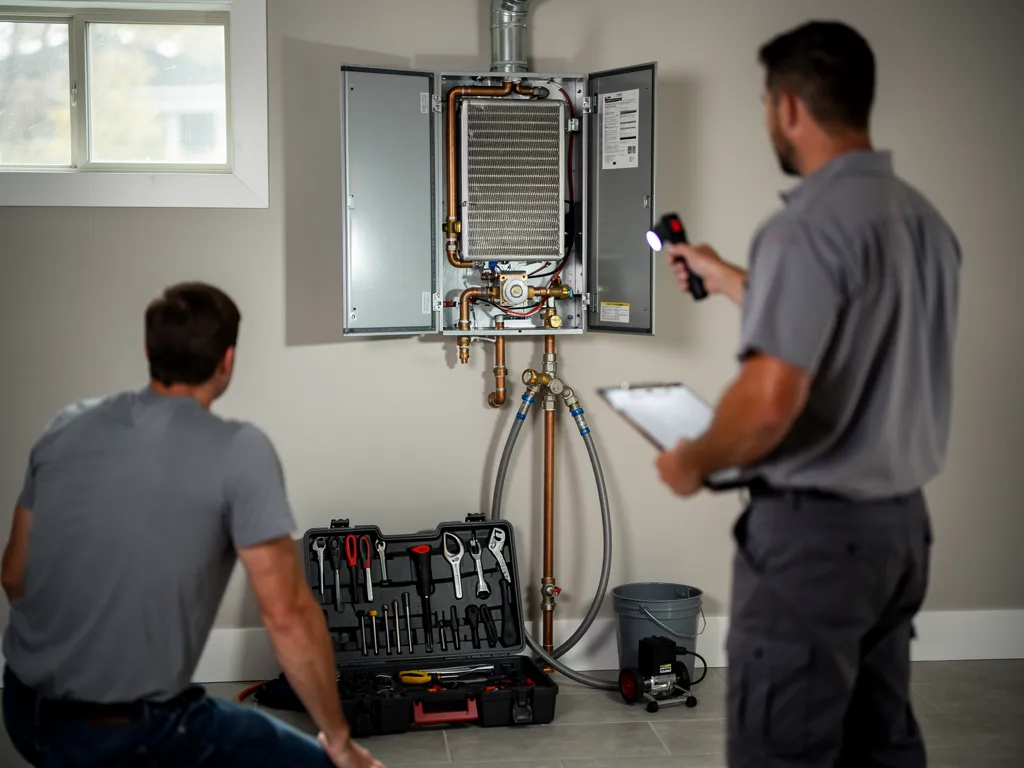
Whether maintenance happens as a DIY project or gets scheduled with a professional, the goal is the same: keep the heat exchanger clear and catch small issues before they become bigger ones.
Which Brands Offer Certified Maintenance Support and Warranty Protection?
Most major tankless manufacturers tie their warranty coverage to documented maintenance, meaning a homeowner needs proof that the unit was flushed and serviced on a regular schedule to keep the warranty valid if something fails down the line. Keeping a simple log of service dates, whether DIY or professional, is worth doing for this reason alone. For general plumbing repair alongside tankless-specific work, or a look at our full range of services, those pages cover what else we handle beyond water heaters.
How to Choose the Best DIY Maintenance Kits for Your Tankless Heater?
A solid DIY descaling kit comes down to a few basics: a pump strong enough to circulate solution through the heat exchanger, hose fittings that actually match the unit’s service port size, and a descaling solution that’s safe for the specific metal used in the exchanger. Checking the unit’s manual for the manufacturer’s own recommendations before buying a kit is the safest way to avoid using the wrong solution on a specific model.
Frequently Asked Questions
How often should a tankless water heater be flushed? Most manufacturers recommend flushing at least once a year. Homes on well water or with harder water often need it more frequently, since mineral content builds up faster inside the heat exchanger.
Can I descale my tankless water heater myself? Many homeowners handle routine descaling themselves using a circulation pump kit and the unit’s existing service ports, as long as isolation valves are already installed. If a unit doesn’t have isolation valves, or scale buildup is significant, a technician can handle it.
What happens if I never maintain my tankless water heater? Skipping maintenance lets mineral scale build up on the heat exchanger, which makes the unit work harder, use more energy, and wear out faster. It can also void manufacturer warranty coverage, since most warranties require documented annual maintenance.
How do I know if my well water is affecting my tankless water heater? Reduced flow, longer wait times for hot water, or a unit that seems to run louder than usual are common signs that hard well water minerals are building up inside the system.
No nonsense, just predictable comfort. If a tankless water heater in Mineral, Louisa, or the Lake Anna area is due for a flush, or acting up in ways a flush won’t fix, call (540) 500-1272 and we’ll take it from there.