Tankless Water Heater Benefits in Central Virginia | Wet Spot Plumbing
A tankless water heater heats water only when it’s needed instead of keeping a full tank hot around the clock, which generally means lower standby energy use, a smaller footprint in the utility space, and hot water that doesn’t run out mid-shower. We install tankless water heaters for homes across Mineral, Louisa, Lake Anna, and the rest of Central Virginia, and the benefits tend to matter most for households that have outgrown what a standard tank can keep up with.
What Is a Tankless Water Heater and How Does On-Demand Heating Work?
A tankless water heater heats water as it flows through the unit rather than storing a limited supply, using either a gas burner or an electric heating element depending on the model. There’s no tank sitting full of hot water waiting to be used, which is the core difference that drives most of its other benefits.
How Does a Tankless System Deliver Continuous Hot Water?
When a hot water tap opens, the unit detects the flow and begins heating immediately, continuing for as long as the tap stays open. Because it’s heating water in real time rather than drawing down a stored supply, it doesn’t run out the way a tank can during a run of back-to-back showers or a laundry-and-dishwasher combo.
What Are the Differences Between Tankless and Traditional Storage Water Heaters?
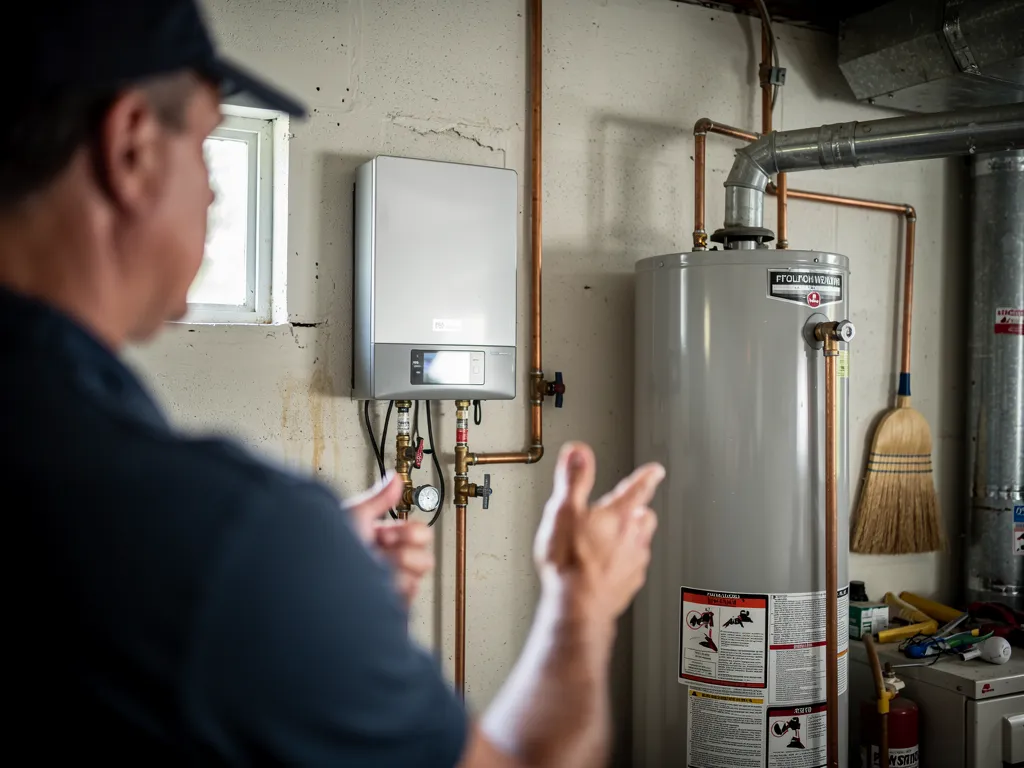
A traditional tank keeps anywhere from 30 to 50-plus gallons of water hot at all times, reheating it continuously to maintain temperature even when no one’s using hot water. A tankless unit, also called an on-demand water heater, skips that entirely, only using energy when there’s an actual demand for hot water, and it mounts on a wall instead of taking up floor space the way a tank does. In the tankless vs tank water heater comparison, that single difference in how each one stores and heats water explains most of the gap in energy use, space, and lifespan between the two.
How Does a Tankless Water Heater Provide Endless Hot Water?
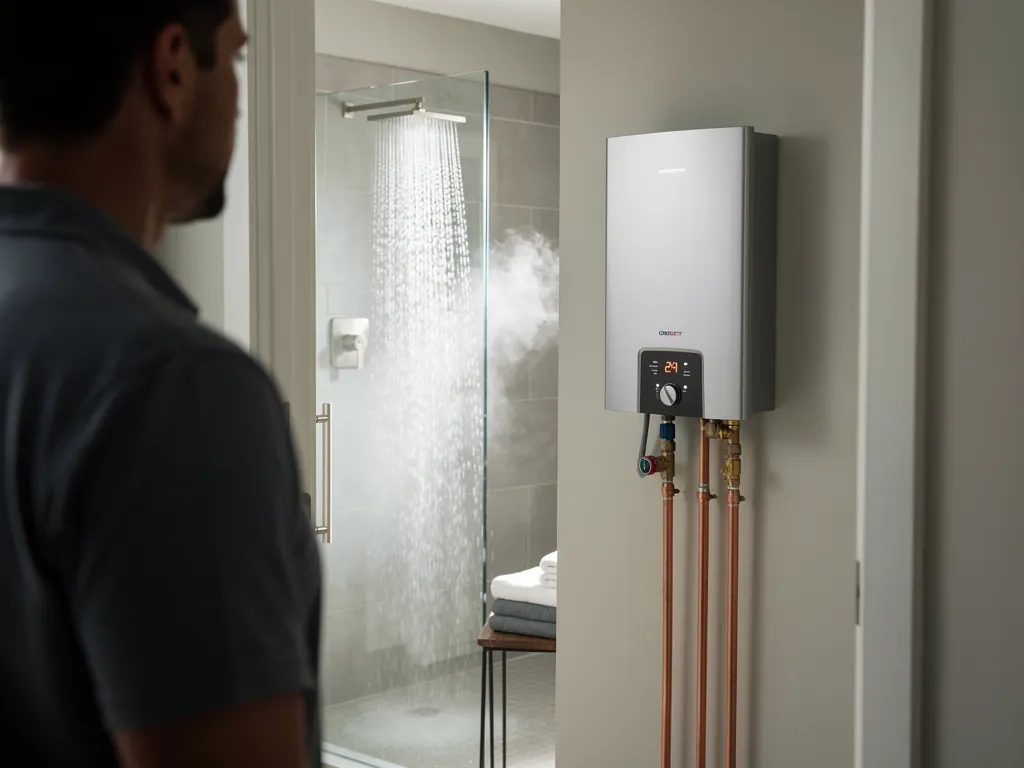
Tankless units are often described as providing “endless” hot water, and within the limits of the unit’s capacity, that’s largely accurate, since there’s no finite tank volume to run through.
What Is the Gallons Per Minute (GPM) Flow Rate and Why Does It Matter?
A tankless unit’s output is measured in gallons per minute, which is how much hot water it can heat at once. If a household runs more fixtures simultaneously than the unit’s GPM rating supports, like a shower and the dishwasher and a load of laundry all at the same time, output can still fall short. Sizing the unit correctly for a home’s actual simultaneous demand is what makes the “endless hot water” benefit hold up in real use.
How Does On-Demand Heating Impact Household Hot Water Availability?
For most households, correctly sized tankless heating means hot water availability stops being a scheduling problem. There’s no waiting for a tank to recover after it’s been drawn down, which matters most for larger families or homes where hot water demand tends to cluster at the same time of day.
How Do Tankless Water Heaters Save Energy and Reduce Utility Bills?
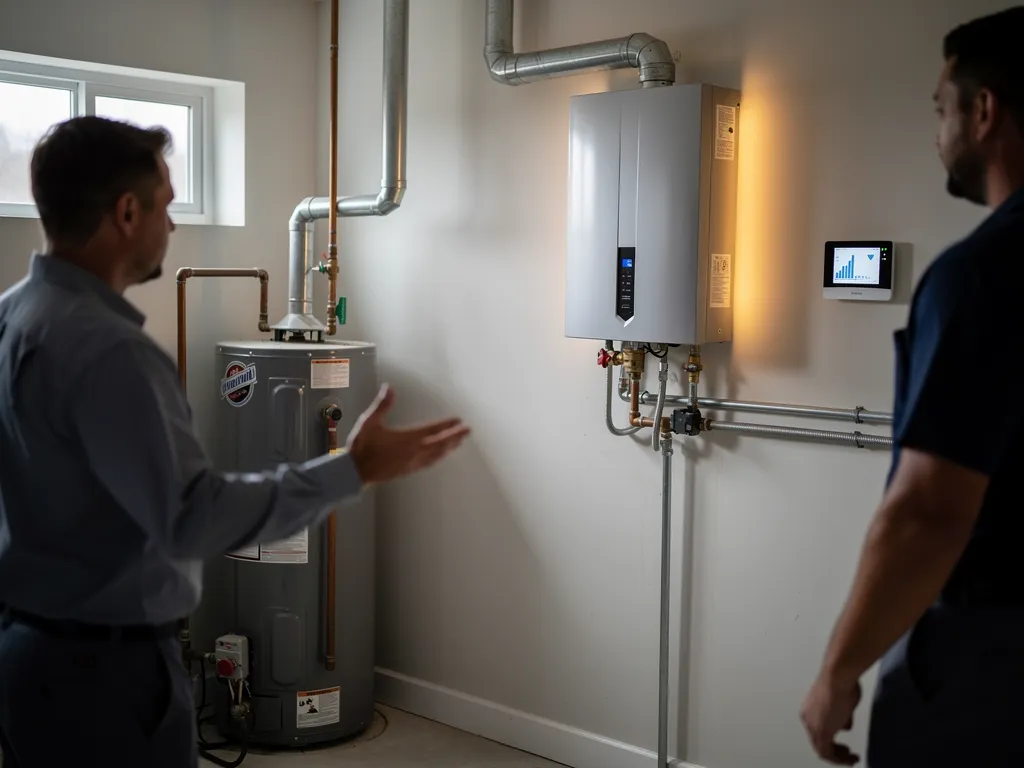
Tankless units generally use less energy than tank units over time, mainly because they eliminate the energy loss that comes from keeping a tank of water hot continuously, making them a genuinely energy efficient water heater choice for most Central Virginia households.
What Is Standby Heat Loss and How Do Tankless Units Eliminate It?
A tank water heater loses some heat through its walls and connections even when no one’s using hot water, and the unit has to keep reheating to make up for that loss, a phenomenon known as standby heat loss. A tankless unit doesn’t store hot water, so there’s nothing sitting around losing heat between uses, and nothing that needs reheating just to maintain a resting temperature.
How Much Energy Can You Save Compared to Traditional Tanks?
The exact savings depend on a household’s usage patterns, local energy costs, and the specific unit installed, so there isn’t one universal number that applies to every home. What’s consistent is that eliminating standby heat loss generally lowers a tankless unit’s operating cost compared to a tank running the same household’s hot water needs.
What Space and Installation Benefits Do Tankless Water Heaters Offer?
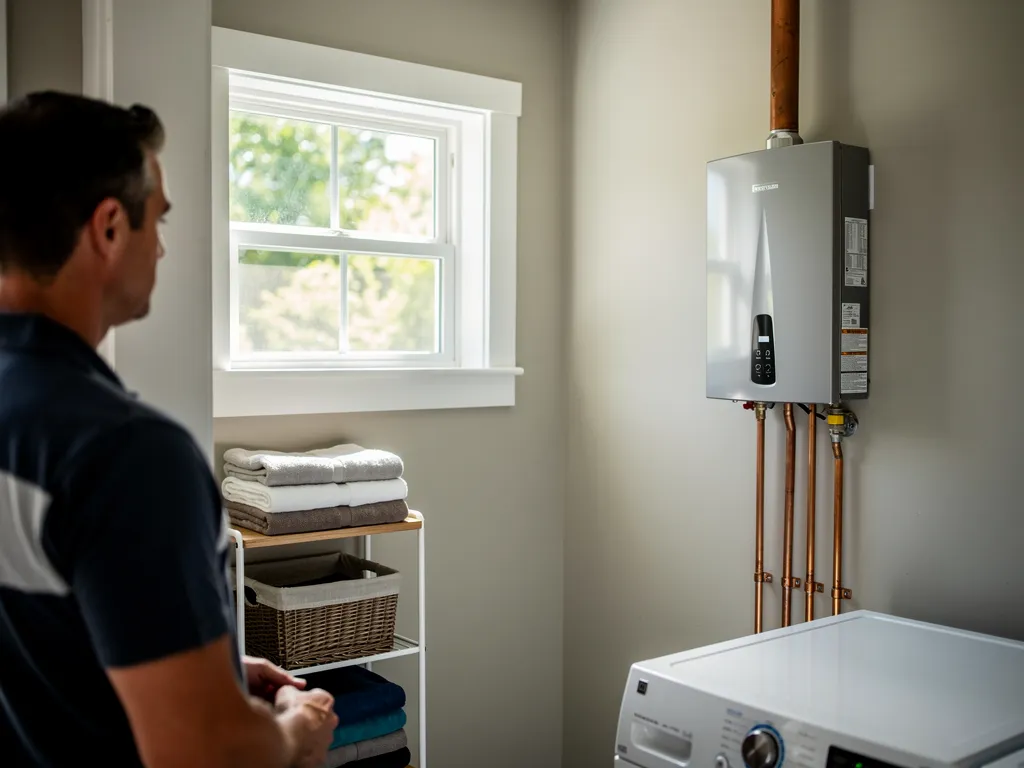
Beyond energy use, the physical footprint of a tankless unit is one of its more practical advantages for a lot of homes.
How Does Wall-Mounted Design Save Space Compared to Storage Tanks?
A tankless unit mounts directly on a wall, freeing up the floor space a tank would otherwise occupy in a utility closet, basement, or garage. For homes with limited mechanical space, that reclaimed square footage can matter as much as anything else the unit offers.
What Are the Advantages for Home Renovations and Mechanical Retrofits?
During a renovation or a mechanical room retrofit, the smaller footprint of a tankless unit gives more flexibility in how that space gets used, whether that’s additional storage, a different equipment layout, or simply a less crowded utility area. It’s worth planning for during any larger project where mechanical space is already being reworked.
How Long Do Tankless Water Heaters Last and What Maintenance Is Required?
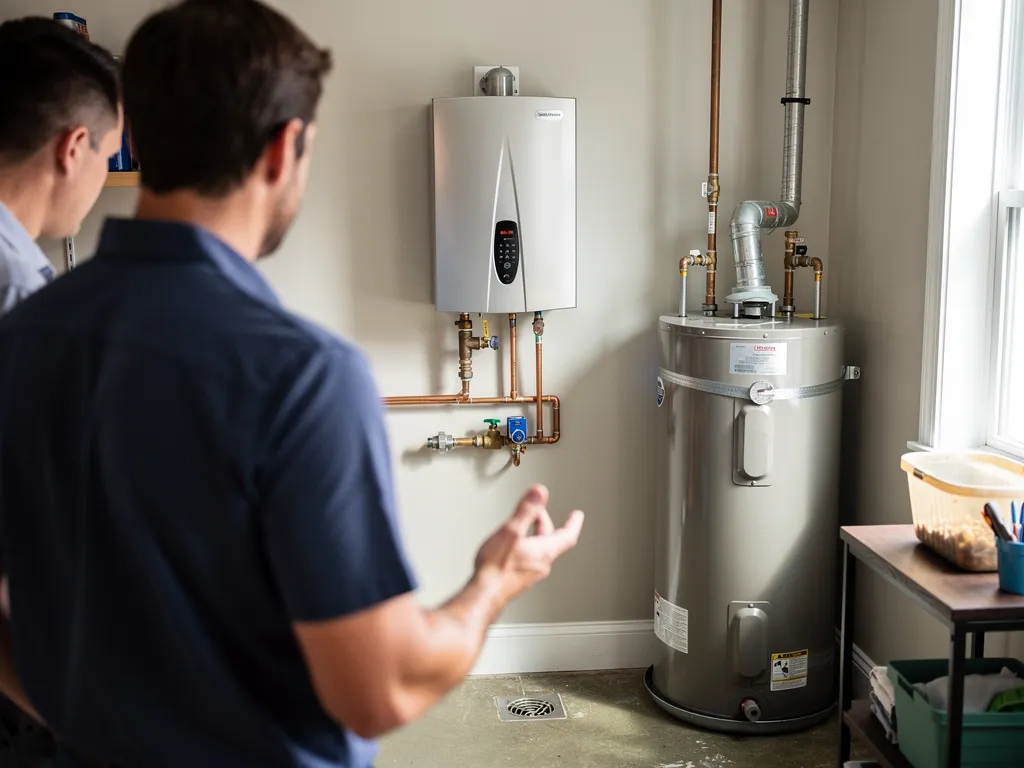
A well-maintained tankless unit generally outlasts a comparable tank water heater by a significant margin.
How Does the 20+ Year Lifespan Compare to Traditional Systems?
Tankless units are commonly cited as lasting 20 years or more under good maintenance and favorable water conditions, compared to roughly 8 to 12 years for a typical tank water heater. The exact number for any specific unit depends heavily on water quality and how consistently it’s maintained, so that upper-end figure isn’t a guarantee on every installation.
What Maintenance Practices Extend Tankless Water Heater Durability?
Annual flushing to clear mineral scale out of the heat exchanger is the single most important maintenance task, especially for homes on well water, where mineral content tends to run higher. Keeping the air intake and venting clear and having the unit checked if performance changes are the other habits that protect a unit’s lifespan over time.
What Is the Environmental Impact of Switching to Tankless Water Heaters?
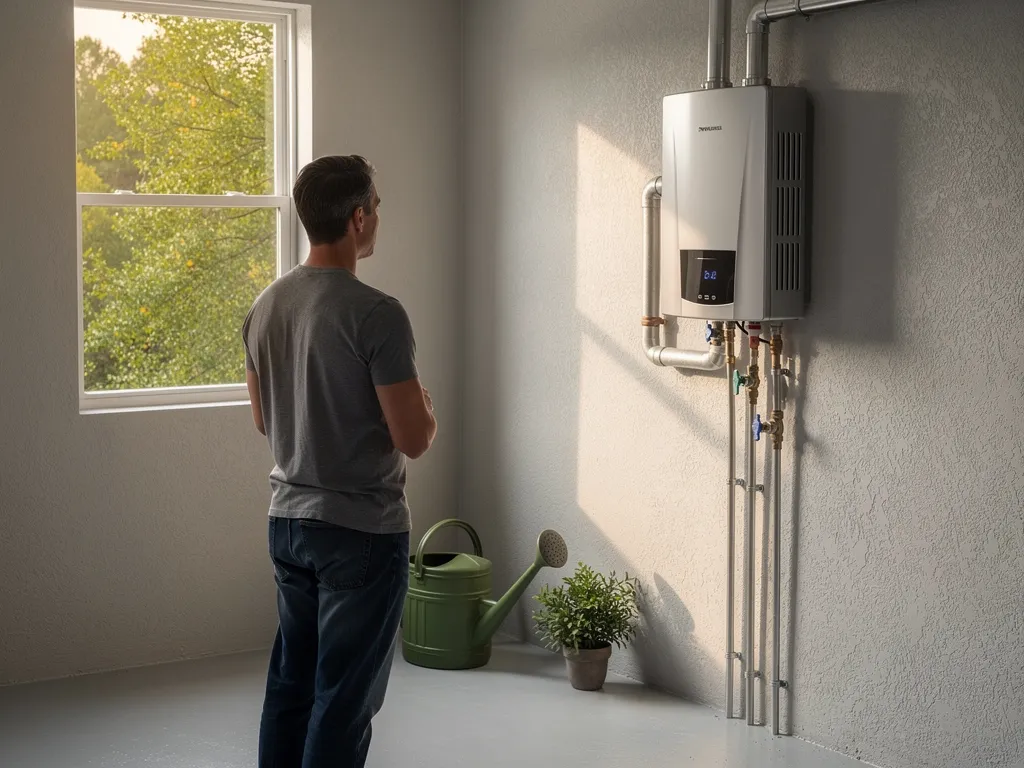
Using less energy to produce the same amount of hot water generally translates into a smaller environmental footprint, independent of any cost savings.
How Do Tankless Water Heaters Reduce Carbon Dioxide Emissions?
Because a tankless unit isn’t continuously reheating a stored tank of water, it uses less energy overall to deliver the same hot water a household needs, and lower energy use generally means fewer emissions associated with that energy, whether it’s coming from a gas burner or the electric grid.
How Does Improved Efficiency Translate to Lower Environmental Impact?
The efficiency gain from eliminating standby heat loss is the main driver here, and it compounds over the unit’s lifespan: a tankless unit that runs for 20 years without the standby losses a tank would have accumulated represents a meaningfully smaller energy footprint over that same period.
What Are the Most Common Questions About Tankless Water Heater Benefits?
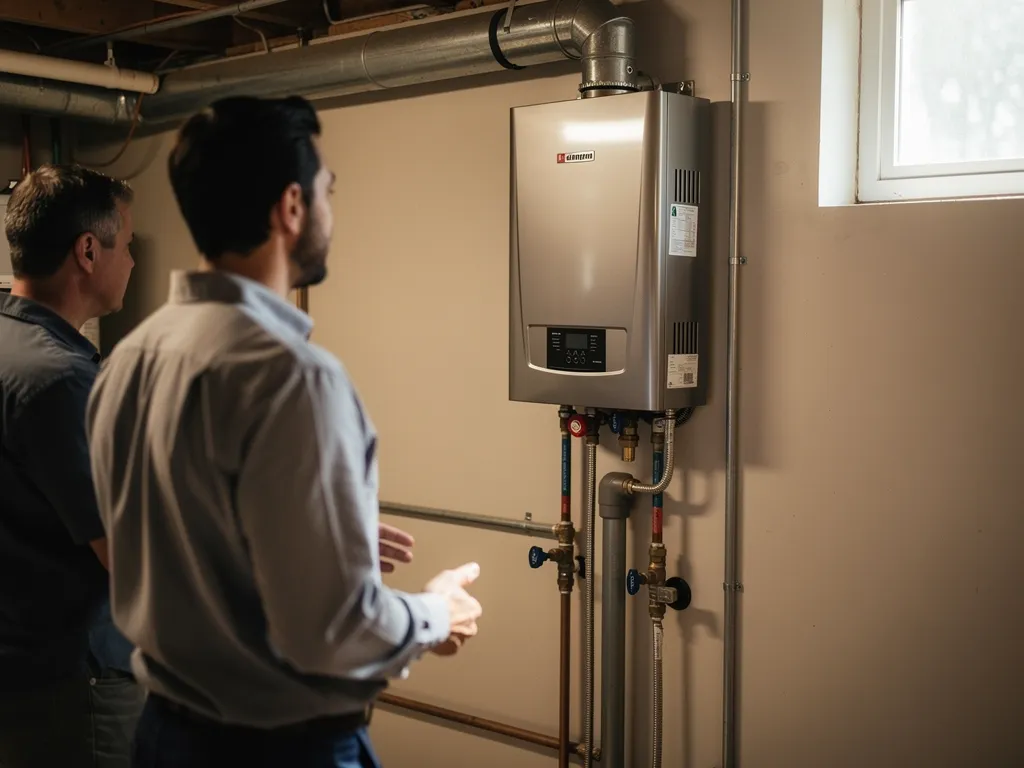
Do Tankless Water Heaters Always Provide Hot Water on Demand?
In normal conditions, yes, as long as the unit is sized correctly for the home’s hot water demand. If multiple fixtures run at once and exceed the unit’s flow rate, output can still fall short, which is why correct sizing at installation matters. Calling (540) 500-1272 gets a technician looking at a home’s actual usage before recommending a specific unit.
How Much More Efficient Are Tankless Water Heaters for Typical Homes?
Tankless units are generally more efficient than storage tank water heaters because they don’t keep a large volume of water hot around the clock. The exact savings for a specific home depend on usage patterns and the unit installed, so a technician can speak to what’s realistic for a given household rather than quoting a number that applies to every home.
What Are the Disadvantages or Limitations?
Tankless units typically cost more upfront for equipment and installation than a comparable tank unit, and some installations need electrical, gas line, or venting upgrades depending on the home’s existing setup. Output is also capped by the unit’s flow rate, so a unit sized too small for a household’s real demand won’t feel endless, and that’s exactly the kind of mismatch a proper sizing assessment is meant to prevent. For a closer look at how tankless and tank units stack up, our tank vs. tankless comparison and installation cost guide go into more detail.
No nonsense, just predictable comfort and endless hot water when it’s sized right for your home. If you’re weighing whether tankless water heater installation makes sense for a home in Mineral, Louisa, or the Lake Anna area, call (540) 500-1272 and we’ll walk through what actually fits your household.